
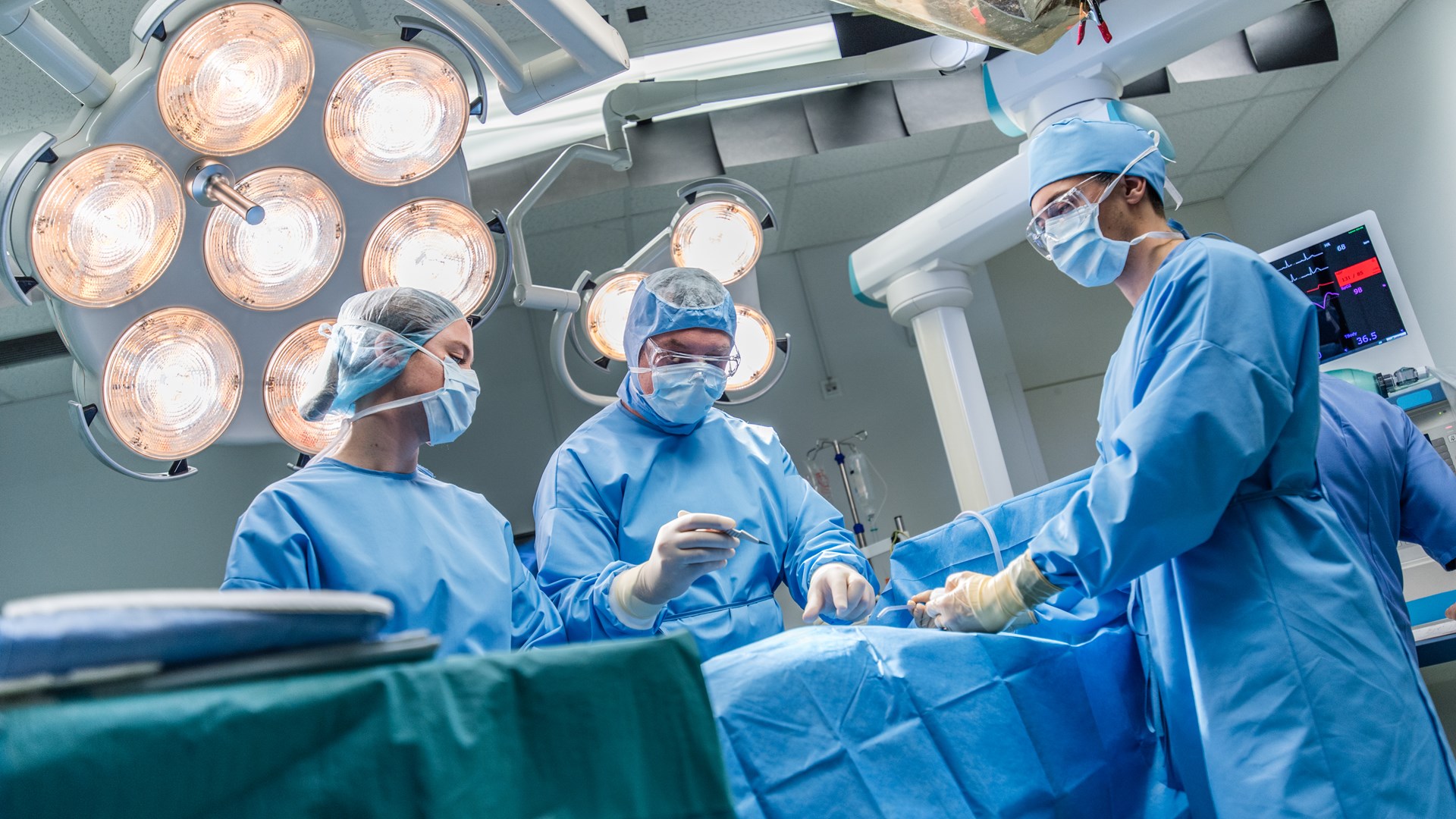
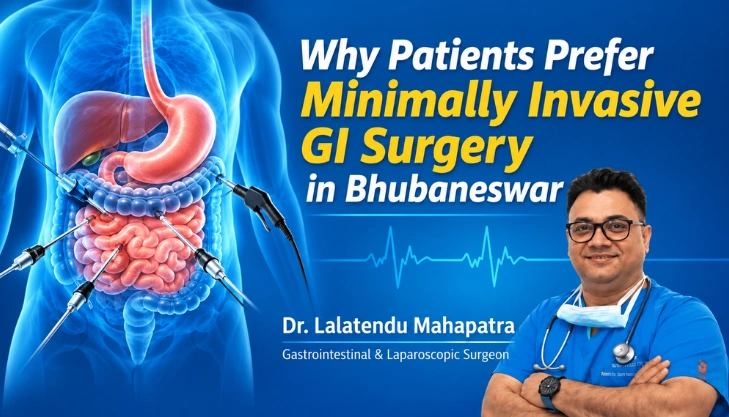
When GI surgery is recommended, patients often worry about pain, hospital stay, scars, and recovery time. GI surgery in Bhubaneswar may include minimally invasive approaches that use smaller incisions and specialised instruments instead of a large surgical opening.
For suitable patients, minimally invasive GI surgery may support a smoother recovery and an earlier return to daily activities. This is one reason why minimally invasive techniques are increasingly considered by patients seeking GI surgery in Bhubaneswar.
What Is Minimally Invasive GI Surgery?
Minimally invasive GI surgery refers to procedures performed through very small incisions using specialised instruments, a high-definition camera, and, in some cases, robotic assistance, instead of one large cut used in traditional open surgery.
How Is It Different From Open Surgery?
In open surgery, the surgeon makes a single, often long, incision to directly access the affected organ. In minimally invasive gastrointestinal surgery, such as laparoscopic surgery or robotic GI surgery, the surgeon operates through 3-4 small incisions (each about 5-12 mm) while viewing a magnified, high-resolution image of the internal organs on a screen. This allows the same level of surgical precision, often with better visualisation, while significantly reducing trauma to surrounding tissue.
Why Are More Patients Choosing Minimally Invasive GI Surgery in Bhubaneswar?
Patients across Odisha are increasingly opting for minimally invasive procedures over traditional surgery. Here is why this shift is happening so rapidly.
1. Smaller Incisions Mean Less Pain
Instead of one long cut, laparoscopic and robotic procedures use a few small incisions, usually less than a centimetre wide. Smaller incisions mean less tissue damage, which directly translates to noticeably lower post-operative pain and less dependence on painkillers.
2. Faster Recovery and Shorter Hospital Stay
One of the biggest reasons patients prefer laparoscopic GI surgery is the faster recovery time. Most patients are up and walking within a day and can be discharged in 2 to 4 days, compared to a week or more after open surgery. Many are also able to return to light daily activities much sooner.
3. Minimal Scarring
Because the incisions are so small, scarring is minimal and often fades significantly over time. This is an important consideration for patients concerned about the cosmetic impact of surgery, particularly younger patients and working professionals.
4. Lower Risk of Infection and Complications
Smaller wounds are exposed to the outside environment for a shorter time and are easier to keep clean, which lowers the risk of surgical site infections. Reduced blood loss during the procedure also means a lower likelihood of complications requiring transfusion.
5. Quicker Return to Work and Normal Life
For working professionals, homemakers, and elderly patients alike, getting back to daily routines quickly matters. Minimally invasive surgery typically allows patients to resume normal activities in a fraction of the time needed after open surgery.
6. Access to Advanced Technology in Bhubaneswar
Patients no longer need to travel to metro cities for advanced surgical care. With modern laparoscopic and robotic infrastructure now available locally, GI surgery in Bhubaneswar has become a trusted, accessible option for families across Odisha.
Which GI Conditions Can Be Treated With Minimally Invasive Surgery?
Minimally invasive techniques are now used to treat a wide range of gastrointestinal conditions, including:
- Gallbladder stones and gallbladder removal (laparoscopic cholecystectomy)
- Hernias – inguinal, umbilical, and incisional hernias
- Appendicitis requiring appendix removal
- Chronic acid reflux and GERD not responding to medication
- Obesity requiring bariatric (weight-loss) surgery
- Gastrointestinal cancers of the colon, stomach, liver, and pancreas
- Fatty liver disease-related complications
Not every patient or every condition is suitable for a minimally invasive approach. A thorough evaluation, including imaging and overall health assessment, helps determine the safest and most effective surgical plan for each individual.
What Are the Key Benefits of Choosing Minimally Invasive GI Surgery?
To summarise, patients across Bhubaneswar choose minimally invasive techniques for the following reasons:
- Less post-operative pain and reduced need for pain medication
- Shorter hospital stay and faster discharge
- Minimal, cosmetically favourable scarring
- Lower risk of wound infection and surgical complications
- Reduced blood loss during surgery
- Quicker return to work, family life, and daily routine
- Better precision in complex procedures with robotic assistance
Is Robotic GI Surgery Better Than Laparoscopic Surgery?
This is one of the most common questions patients ask during consultation. The honest answer is that both are minimally invasive techniques, and the better option depends on the specific condition, its complexity, and the patient’s overall health.
Laparoscopic surgeryis highly effective for a large number of standard GI procedures and has decades of proven safety and outcomes data behind it.
Robotic surgery offers added dexterity, 3D visualisation, and tremor-free precision, which can be especially useful in complex, deep-pelvic, or reconstructive procedures.
During your consultation, your surgeon will recommend the approach best suited to your specific diagnosis rather than a one-size-fits-all answer.
Open vs Laparoscopic vs Robotic GI Surgery – What’s the Difference?
Choosing the right surgical approach depends on the patient’s condition, medical history, and the complexity of the procedure. Here is a side-by-side comparison to help you understand the key differences.
| Feature | Open Surgery | Laparoscopic Surgery | Robotic Surgery |
|---|---|---|---|
| Incision Size | Large, single incision | Several small (5-10mm) incisions | Several small, precisely placed incisions |
| Surgeon’s View | Direct, naked-eye view | 2D/3D view via camera on a monitor | High-definition 3D magnified view |
| Precision & Control | Dependent on manual dexterity | Good, with limited wrist movement | Enhanced with robotic wrist articulation |
| Blood Loss | Comparatively higher | Minimal | Minimal |
| Post-Operative Pain | Higher, longer recovery | Significantly reduced | Significantly reduced |
| Hospital Stay | 5-10 days (varies by case) | 2-4 days (varies by case) | 1-3 days (varies by case) |
| Scarring | Visible, larger scar | Minimal, small scars | Minimal, often barely visible |
| Best Suited For | Complex or emergency cases | Most routine and moderately complex GI conditions | Complex, delicate procedures needing high precision |
For a more detailed breakdown, you can also read laparoscopic surgery vs robotic surgery – what’s the difference, which explains which approach may be suitable for different conditions.
Why Minimally Invasive Surgery Is Becoming More Accessible in Bhubaneswar
Advances in surgical techniques and technology have made minimally invasive GI procedures more widely available in Bhubaneswar. Patients can now explore laparoscopic and, where appropriate, robotic surgical options closer to home rather than automatically travelling to another city for treatment.
As a gastrointestinal and laparoscopic surgeon practicing in Bhubaneswar, I have seen how these advances have expanded the surgical options available to patients. The choice of procedure, however, should always depend on the patient’s condition, the complexity of the surgery, and the approach that is most appropriate for their individual needs.
This growing access gives patients more options while allowing them to receive specialised surgical evaluation closer to home.
A Final Word
Minimally invasive GI surgery can offer benefits such as smaller incisions, less postoperative discomfort, and a potentially faster recovery for suitable patients. However, the right approach depends on the patient’s condition, overall health, and surgical needs. A consultation with an experienced GI surgeon can help you understand your options and choose the most appropriate treatment.
Discover More About Your Health:
👉 When is Robotic Surgery Better than Laparoscopic Surgery
👉 Why More Patients in Odisha Prefer Laparoscopic Surgery
👉 Most Common Types of Gastrointestinal Cancer

Related Posts
What is the Difference Between Robotic and Laparos...
By Dr. Lalatendu Mahapatra | Gastrointestinal, Laparoscopic & Robotic Surgeon, Manipal Hospitals, Bhubaneswar “...
Read More
7 Early Signs of Colon Cancer You Should Never Ign...
Colon cancer is one of the most common gastrointestinal cancers affecting both men and women today. The challenging part...
Read More