

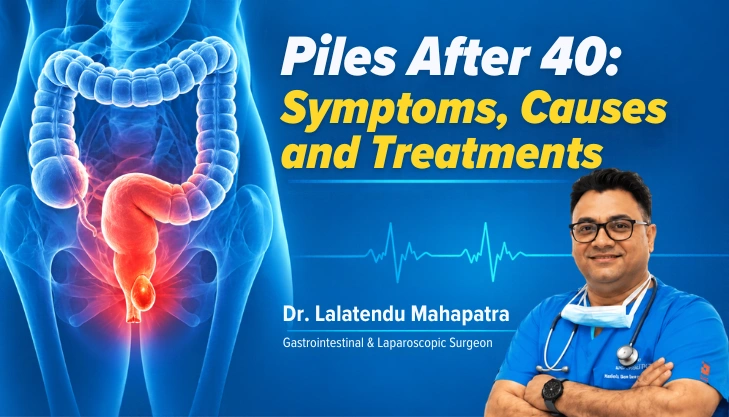
Have you noticed discomfort, itching, or a little blood after using the washroom, and wondered if this is just a normal part of turning 40? You are not alone. In my clinic, this is one of the most common concerns patients bring up, often hesitantly, after they have quietly dealt with it for months. Piles, also known as haemorrhoids, become more common with age. If you are experiencing piles after 40, understanding the possible causes and early symptoms can help you seek appropriate treatment sooner.
This guide walks you through what piles are, why they show up more often after 40, the symptoms to watch for, and the treatment options available today, from simple lifestyle changes to advanced minimally invasive surgery.
What Are Piles (Haemorrhoids)?
Piles are swollen blood vessels in and around the rectum and anus. Everyone has this network of veins; the trouble starts when they become enlarged, inflamed, or prolapsed due to increased pressure or weakened support tissue.
Piles are broadly grouped into two types:
- Internal piles – form inside the rectum and are usually painless but may bleed.
- External piles – form under the skin around the anus and can be painful, especially if a clot develops.
Why Piles Become More Common After 40
Age brings gradual changes in the body, and the tissues supporting your rectal veins are no exception. Several factors combine to make piles more likely after 40:
Natural Ageing of Supportive Tissue
With age, the connective tissue that holds rectal veins in place loses some of its strength and elasticity. This makes veins more prone to bulging under everyday pressure.
Lifestyle and Habit-Related Factors
- Years of a low-fibre diet catching up with the digestive system
- Long working hours spent sitting, especially in desk-based jobs
- Reduced physical activity compared to younger years
- Chronic constipation or straining built up over time
- For women, the cumulative effect of pregnancies earlier in life
None of this means piles are inevitable after 40. It simply means your body benefits from a little more attention to diet, movement, and bowel habits from this age onward.
Causes of Piles After 40
Here is a quick look at the most common contributing factors and why they matter more as we age:
- Aging tissues:The tissue that supports rectal veins naturally loses elasticity with age, making veins more likely to swell and bulge.
- Chronic constipation:Straining during bowel movements increases pressure on rectal veins, a common trigger for piles.
- Sitting too long:Long hours of sitting, common in desk jobs, slows blood flow in the pelvic region.
- Low-fibre diet: Reduced fibre intake leads to harder stools and more straining over time.
- Pregnancy and childbirth history: In women, past pregnancies can weaken pelvic support structures, with effects becoming noticeable later in life.
- Obesity: Extra body weight adds pressure on pelvic and rectal veins.
Symptoms of Piles You Shouldn’t Ignore
Many people delay seeing a doctor because early symptoms feel minor. Here are the signs worth paying attention to:
- Bleeding: Bright red blood on tissue paper or in the toilet bowl after passing stool
- Itching: The skin around the anus can feel very itchy and irritated.
- Lumps: A lump or swelling near the anus that may be tender
- Pain: Pain or discomfort while sitting, especially with external piles
Treatment Options for Piles After 40
The right treatment depends on the grade and severity of piles. The good news is that most cases, especially when caught early, respond very well to conservative measures.
Lifestyle and Home Care
- Increase fibre intake through fruits, vegetables, and whole grains
- Drink plenty of water through the day
- Avoid straining or spending long periods on the toilet
- Stay physically active with regular walking or light exercise
- Warm sitz baths to ease discomfort and swelling
Non-Surgical Medical Treatments
- Topical creams or ointments to reduce inflammation and itching
- Stool softeners to ease bowel movements
- Rubber band ligation for internal piles
- Sclerotherapy, an injection technique that shrinks the piles
Surgical and Minimally Invasive Treatment
When piles are advanced (Grade 3 or Grade 4), recurrent, or not responding to conservative care, surgery offers a reliable, long-term solution. Advances in laparoscopic and minimally invasive surgical techniques have made haemorrhoid surgery far more comfortable than it used to be, with smaller incisions, less pain, and quicker recovery.
Common procedures include:
- Minimally invasive haemorrhoidectomy – surgical removal of piles tissue
- Stapled haemorrhoidopexy – repositions prolapsed tissue and cuts off blood supply to the piles
- Laser-assisted procedures, depending on individual suitability
Here is a simple comparison to help you understand the two broad treatment paths:
| Aspect | Non-Surgical Treatment | Surgical Treatment |
|---|---|---|
| Best suited for | Grade 1 and Grade 2 piles | Grade 3, Grade 4, or non-responsive piles |
| Common methods | Dietary changes, medication, rubber band ligation, sclerotherapy | Laparoscopic or minimally invasive haemorrhoidectomy, stapled haemorrhoidopexy |
| Recovery time | Usually quick, minimal downtime | A few days to a couple of weeks, depending on the procedure |
| Anaesthesia needed | Usually not required | Yes, typically day-care or short-stay procedure |
Prevention: Keeping Piles Away After 40
A few consistent habits can go a long way in preventing piles or stopping them from coming back:
- Build fibre-rich foods into every meal, not just occasionally
- Set a fixed time for bowel movements and avoid delaying the urge
- Take short movement breaks if your work involves long sitting hours
- Maintain a healthy body weight
- Avoid over-reliance on laxatives without medical advice
Frequently Asked Questions
Is it normal to get piles after 40?
Yes, piles become more common after 40 due to natural changes in vein and tissue support, along with cumulative lifestyle factors. It does not mean something is seriously wrong, but it does need proper evaluation and care.
Can piles go away on their own?
Mild, early-stage piles often improve with dietary changes and better bowel habits. However, larger or recurrent piles usually need medical or surgical treatment for lasting relief.
Is surgery always required for piles?
No. Most piles, especially Grade 1 and Grade 2, respond well to lifestyle changes and non-surgical treatments. Surgery is generally reserved for advanced or persistent cases.
Does piles surgery hurt a lot?
Modern minimally invasive and laparoscopic techniques have significantly reduced post-operative pain compared to older surgical methods, along with a faster return to daily activities.
Can piles be a sign of something more serious?
Sometimes, rectal bleeding can be caused by conditions other than piles, including fissures or colorectal issues. This is why any new bleeding after 40 deserves a proper medical evaluation rather than self-diagnosis.
Conclusion
Piles after 40 are common, treatable, and nothing to feel embarrassed about. The key is not to ignore the early signs. With the right combination of lifestyle changes, timely medical care, and, when needed, advanced surgical treatment, most patients find lasting relief and get back to their normal, active lives.
If you are experiencing symptoms of piles or would like an expert evaluation, do not hesitate to seek professional care early. Timely consultation makes treatment simpler and recovery faster.
Explore Related Treatment and Surgical Care:
👉 Why Patients Prefer Minimally Invasive GI Surgery
👉 Why More Patients in Odisha Prefer Laparoscopic Surgery
👉 How to Choose the Right Gastrointestinal Surgeon
👉 Why More Patients in Bhubaneswar Prefer Laparoscopic Surgery

Related Posts
What Are the Common Causes of Persistent Abdominal...
Persistent abdominal pain can have many causes, ranging from acidity and digestive disorders to gallstones, hernias, pan...
Read More
Digestive Health After 40: Common Conditions You S...
Digestive health can change with age. After 40, some people may notice more frequent acidity, bloating, changes in bowel...
Read More