

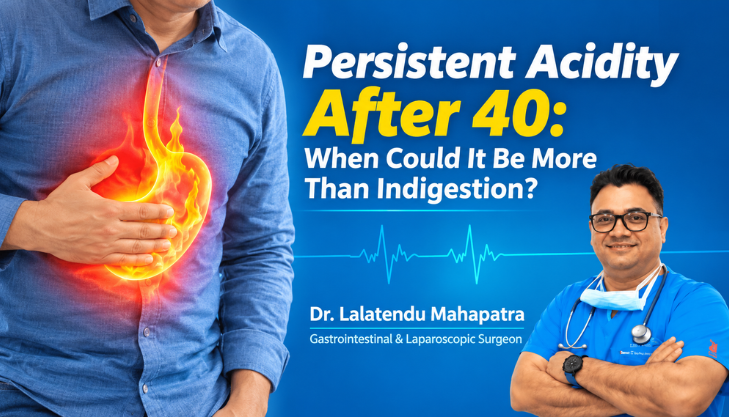
Occasional acidity after a heavy or spicy meal is common. However, Persistent Acidity After 40 deserves closer attention when symptoms keep returning week after week.
Many people manage it with antacids for months and assume it is simple indigestion. Often it is. But sometimes persistent acidity is the first sign of acid reflux disease, an ulcer, a hiatal hernia, gallbladder trouble, or a more serious condition that needs timely care.
This guide explains what is normal, what is not, and when it is time to see a specialist.
Acidity, Heartburn, and Indigestion: What Is the Difference?
People use these words interchangeably, but they describe slightly different problems.
Heartburn is a burning feeling behind the breastbone, often after eating or when lying down.
Acid reflux happens when stomach contents flow back up into the esophagus (the food pipe).
Indigestion (dyspepsia) is discomfort in the upper abdomen, such as fullness, bloating, nausea, or feeling full too soon.
When reflux becomes frequent or causes complications, it is called gastroesophageal reflux disease (GERD). Doctors often suspect GERD when heartburn occurs two or more days a week. The National Institute of Diabetes and Digestive and Kidney Diseases (NIDDK) also notes that not every adult with GERD has heartburn, and that some have trouble swallowing, chronic cough, or hoarseness instead.
Why Acidity Becomes More Likely After 40
A muscle valve at the lower end of the food pipe, together with the diaphragm, normally keeps acid where it belongs. Several things can interfere with it, and many of them become more common in midlife:
- Weight gain around the abdomen, which increases pressure on the stomach.
- A hiatal hernia, where part of the stomach pushes up through the diaphragm, which can make reflux more likely or worse.
- Regular pain medicines (NSAIDs) taken for joint or back pain, which can irritate the stomach lining.
- H. pylori infection, a common stomach bacterium linked to gastritis and ulcers.
- Lifestyle habits such as late dinners, skipped meals, long hours of sitting, stress, tobacco, and alcohol.
Our guide on digestive health after 40 covers how other common conditions change with age.
Warning Signs: When Acidity Could Be More Than Indigestion
Most acidity is not dangerous. But certain symptoms are called alarm symptoms, because they can point to complications or other serious digestive conditions. See a doctor promptly if acidity comes with any of these:
- Difficulty swallowing, pain while swallowing, or a feeling that food is stuck
- Unexplained weight loss or loss of appetite
- Repeated or persistent vomiting
- Vomiting blood, or black, tarry stools
- Anemia, unusual tiredness, or looking pale
- Symptoms that do not improve with medicines and lifestyle changes
- New symptoms after 40, or a family history of stomach or esophageal cancer
NIDDK also advises seeing a doctor if symptoms do not get better with over-the-counter medicines or lifestyle changes, or if they may be related to complications such as swallowing problems or unexplained weight loss.
A related point: blood in the stool is not always piles. It is a symptom that needs a proper check, and our article on piles after 40 explains how to tell when bleeding should not be ignored.
| Chest Pain: Do Not Assume It Is Acidity
Heart attack pain can feel like burning, pressure, or heaviness in the chest. If chest discomfort comes with sweating, breathlessness, pain spreading to the arm, jaw, or back, or a sense of unease, seek emergency care immediately. Do not wait to see if an antacid helps. |
Conditions That Can Hide Behind “Just Acidity”
Several digestive problems produce symptoms that feel like acidity at first. This table shows how they differ.
| Condition | How it may feel | Why it matters |
|---|---|---|
| GERD | Heartburn, sour taste, regurgitation, chronic cough, or hoarseness | Long-standing reflux can inflame and damage the esophagus |
| Hiatal hernia | Reflux that is worse when bending or lying down | Can worsen GERD and may need surgical evaluation if medicines fail |
| Gastritis | Burning or gnawing upper abdomen, nausea, bloating | Often linked to H. pylori, NSAIDs, or alcohol; needs the cause treated |
| Peptic ulcer | Burning pain, feeling full early, nausea, belching | Can bleed or cause complications if untreated |
| Gallstones | Pain in the upper abdomen, often after oily or fatty meals | Commonly mistaken for acidity; can cause inflammation or infection |
| Barrett’s esophagus | May have no extra symptoms beyond long-standing reflux | A complication of chronic GERD that needs endoscopic follow-up |
| Stomach or esophageal cancer | Swallowing difficulty, weight loss, early fullness, persistent indigestion | Uncommon, but early detection makes a real difference |
The two most common causes of peptic ulcers are H. pylori infection and regular NSAID use, according to NIDDK’s guide to peptic ulcers. Both are treatable once identified.
Upper abdominal pain that does not behave like typical acidity is another reason to investigate. Our article on the common causes of persistent abdominal pain explains what else may be responsible.
How the Cause Is Found
A careful history and examination come first: when symptoms occur, what triggers them, which medicines you take, and whether any warning signs are present. Depending on what we find, your doctor may recommend:
- Upper GI endoscopy, a short procedure with a thin camera to look at the esophagus, stomach, and first part of the small intestine. It is particularly important when alarm symptoms are present.
- H. pylori testing to check for the bacterium behind many ulcers and cases of gastritis.
- Blood tests, including a hemoglobin check for anemia.
- Abdominal ultrasound to look for gallstones and other causes of upper abdominal pain.
- Specialized reflux tests in selected patients when the diagnosis remains unclear or symptoms persist despite treatment.
Not everyone needs every test. The goal is to match the investigation to your symptoms, not to over-test.
Treatment: From Lifestyle Changes to Surgery
1. Lifestyle changes
These form the foundation of treatment and often make a real difference:
- Finish meals 2 to 3 hours before lying down.
- Eat smaller, regular meals instead of long gaps followed by heavy meals.
- Lose weight if you are overweight, as this reduces pressure on the stomach.
- Identify and avoid your personal trigger foods and drinks.
- Stop smoking and tobacco chewing, and limit alcohol.
- Raise the head of your bed if night-time symptoms are a problem.
2. Medicines, used correctly
Acid-reducing medicines can heal inflammation and relieve symptoms, but they should be taken for the right duration and under medical guidance. If H. pylori is found, a prescribed combination of medicines is used to clear it. If NSAIDs are the trigger, your doctor may change or reduce them. Please avoid staying on acid medicines for months without a proper evaluation.
3. When surgery is considered
Surgery is not the first step for acidity. It becomes a consideration when symptoms continue despite proper treatment, when a hiatal hernia is contributing to significant reflux, when complications develop, or when gallstones are causing symptoms. Many of these problems can be treated with minimally invasive techniques, which usually mean smaller incisions, less pain, and quicker recovery. You can read more about general laparoscopic surgery and the conditions it treats.
When Should You See a Specialist?
Do not wait for the problem to become severe. Book a consultation if:
- You have heartburn or acidity two or more days a week.
- You need antacids regularly for more than two weeks.
- You have any warning sign listed above.
- Acidity started recently after 40 with no clear trigger.
- Symptoms disturb your sleep, eating, or daily routine.
- Medicines give only temporary relief, or symptoms return as soon as you stop them.
| Book a Consultation
If acidity has become part of your daily life, a proper evaluation can give you clarity and the right treatment plan. Book an appointment with Dr. Lalatendu Mahapatra. Phone: +91 9937767835 Location: Room No 3167, Manipal Hospitals, Khandagiri, Bhubaneswar, Odisha 751030 Hours: 11:00 AM to 04:00 PM, Monday to Saturday |
Frequently Asked Questions
Is daily acidity normal after 40?
No. Occasional acidity is common, but daily or weekly symptoms are not something to simply live with. They usually have an identifiable cause that can be treated.
Can acidity cause chest pain?
Yes, reflux can cause chest burning or pain. However, chest pain should never be assumed to be acidity, because heart problems can feel similar. Seek emergency care if pain comes with sweating, breathlessness, or spreading pain.
How long can I take antacids before seeing a doctor?
If you need antacids regularly for more than two weeks, or most days of the week, get evaluated. Earlier is better if you have any warning sign.
Does acidity cause weight loss?
Not typically. Unexplained weight loss together with acidity or indigestion should be checked promptly, as it can point to another condition.
Is an endoscopy painful?
It is usually done with sedation or throat numbing and takes only a few minutes. It is one of the most reliable ways to see what is happening inside the upper digestive tract.
Can persistent acidity be a sign of cancer?
Rarely. Most cases are caused by reflux, gastritis, or ulcers. But swallowing difficulty, weight loss, vomiting, bleeding, or symptoms that do not settle are reasons to be examined without delay.
Final Thoughts
Acidity is common, but persistent acidity after 40 is a signal worth listening to. In most people, a clear diagnosis and the right combination of lifestyle changes, medicines, and follow-up bring lasting relief. In others, it leads to the early detection of a condition that is far easier to treat when caught in time.
If your symptoms keep returning, or if any warning sign applies to you, please do not delay a consultation.
Explore Related Treatment and Surgical Care:
👉 What Are the Common Causes of Persistent Abdominal Pain
👉 Why Patients Prefer Minimally Invasive GI Surgery
👉 How to Choose the Right Gastrointestinal Surgeon in Bhubaneswar
👉 What Are the Most Common Types of Gastrointestinal Cancer

Related Posts

Laparoscopic Weight Loss Surgery in Bhubaneswar: T...
Obesity is more than a concern about body weight or appearance. It is a chronic health condition that can affect blood s...
Read More
Piles After 40: Symptoms, Causes and Treatments...
Have you noticed discomfort, itching, or a little blood after using the washroom, and wondered if this is just a normal ...
Read More