

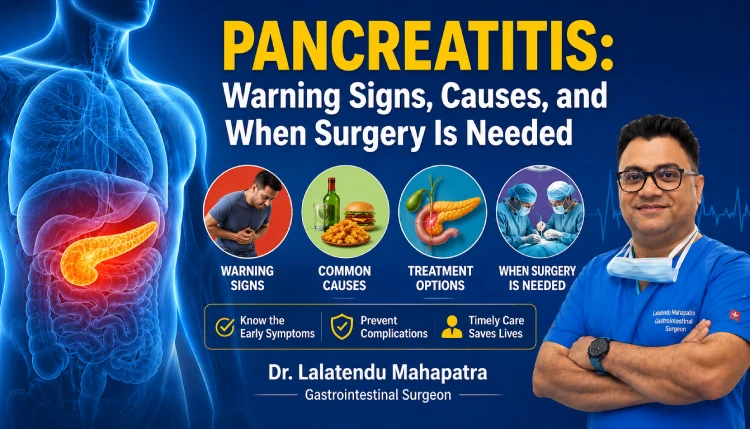
Your pancreas is a quiet organ. Tucked behind your stomach, it works day and night to produce digestive enzymes and regulate blood sugar. Most people never think about it – until something goes wrong.
Pancreatitis is a condition where the pancreas becomes inflamed, often suddenly and severely. It can range from a manageable episode that resolves with rest and hydration, to a life-threatening emergency that demands immediate surgical care. As a surgical gastroenterologist, I have seen both ends of this spectrum. What makes the difference, in many cases, is how quickly a patient recognizes the warning signs and seeks proper treatment.
In this blog, I will walk you through what pancreatitis is, what causes it, how to recognize its symptoms, and – most importantly – when surgery becomes necessary. My goal is simple: to give you the clarity and confidence to act when it matters most.
What Is Pancreatitis?
Pancreatitis occurs when the digestive enzymes produced by the pancreas become activated before they leave the gland. Instead of breaking down food in the intestine, they begin breaking down the pancreatic tissue itself. This self-digestion triggers inflammation, swelling, and sometimes severe internal damage.
Types of Pancreatitis at a Glance
|
Both forms require medical attention. And in certain situations, both may require surgical intervention.
Common Causes of Pancreatitis
Understanding the cause of pancreatitis is critical – not just for treatment, but for prevention. The most common causes include:
1. Gallstones
- Gallstones are the leading cause of acute pancreatitis. A stone that slips out of the gallbladder and blocks the common bile duct can trigger a dangerous backup of digestive enzymes into the pancreas. This is a medical emergency.
- For a complete picture of how gallstones develop and are treated, read our detailed guide on understanding gallbladder stones – causes, symptoms, and treatment.
2. Alcohol Use
- Heavy or long-term alcohol consumption is one of the most common causes of both acute and chronic pancreatitis.
- Alcohol disrupts normal enzyme activity and can damage pancreatic cells over time.
3. High Triglycerides (Hypertriglyceridemia)- Very high levels of fat in the blood can inflame the pancreas. This is often linked to poorly controlled diabetes , obesity, or certain genetic conditions.
4. Medications – Some prescription drugs, including certain antibiotics, diuretics, and immunosuppressants, can trigger pancreatitis as a side effect.
5. Trauma or Injury – A direct injury to the abdomen – from an accident, a fall, or even a medical procedure – can damage the pancreas and lead to inflammation.
6. Autoimmune and Genetic Causes – Autoimmune pancreatitis and hereditary conditions like cystic fibrosis can also lead to pancreatic inflammation, though these are less common.
7. Idiopathic (Unknown Cause) – In some cases, no clear cause is found. A thorough evaluation is still needed to rule out treatable causes and guide management.
Warning Signs You Should Never Ignore
Pancreatitis can disguise itself as ordinary stomach pain – until it cannot be ignored. Here are the key warning signs:
- Severe Upper Abdominal Pain – A constant, deep pain in the upper abdomen, often described as boring into the back, is the hallmark symptom of pancreatitis. It may worsen after eating or drinking.
- Nausea and Vomiting – Most patients feel intensely nauseated, and vomiting does not provide relief.
- Fever and Chills – A fever suggests that infection or significant inflammation is present – a red flag for serious disease.
- Rapid Heart Rate – Tachycardia (a fast heartbeat) often accompanies severe pancreatitis due to pain, dehydration, or systemic infection.
- Swollen or Tender Abdomen – The belly may feel hard, distended, or extremely tender to touch.
- Yellowing of Skin or Eyes (Jaundice) – This suggests that a bile duct blockage – often from a gallstone – may be involved.
- Feeling Very Unwell Overall – Some patients describe a sudden, overwhelming sense that ‘something is very wrong.’ Trust that instinct.
Important: If you experience severe upper abdominal pain that does not subside within a few hours – especially if accompanied by fever, vomiting, or jaundice – seek emergency medical care immediately. Do not wait.
Abdominal pain that is sudden, severe, or worsening should never be dismissed. Similar urgency applies to conditions like appendicitis – learn to identify the early symptoms of appendicitis so you can act fast when it counts.
How Pancreatitis Is Diagnosed and Initially Treated
When you arrive at the hospital with symptoms suggestive of pancreatitis, the medical team will act quickly. Diagnosis typically involves:
- Blood tests – Elevated levels of amylase and lipase enzymes are the primary diagnostic markers.
- Ultrasound – To detect gallstones or bile duct dilation.
- CT Scan – Provides detailed images of the pancreas to assess the severity of inflammation and identify complications like fluid collections or necrosis.
- MRI/MRCP – Used in specific cases to evaluate the bile and pancreatic ducts without radiation.
Initial treatment focuses on resting the pancreas: patients are kept nil by mouth (NPO), given intravenous fluids, pain relief, and monitored closely. Mild pancreatitis often resolves within a week with this approach. Severe pancreatitis, however, may escalate rapidly and require more aggressive intervention.
When Does Pancreatitis Require Surgery?
This is the question I am most often asked – and the answer is: it depends on the type, severity, and underlying cause of pancreatitis. Here is a clear breakdown of the surgical scenarios:
1. Gallstone-Related Pancreatitis
- If gallstones caused the episode, removing the gallbladder (laparoscopic cholecystectomy) is recommended – ideally during the same hospital admission or shortly after recovery. Without this, the risk of recurrence is very high.
- If a stone is still blocking the bile duct, an endoscopic procedure (ERCP) may be needed before or instead of surgery.
2. Infected Pancreatic Necrosis
- In severe acute pancreatitis, areas of pancreatic tissue can die (necrosis). If these areas become infected, this is a life-threatening emergency.
- Surgery, often called necrosectomy or minimally invasive drainage, is required to remove or drain the infected tissue.
3. Pancreatic Pseudocyst
A fluid-filled sac (pseudocyst) can form after pancreatitis. Small pseudocysts often resolve on their own. But when a pseudocyst is large, causing pain, or showing signs of infection, drainage – either surgical, endoscopic, or radiological – becomes necessary.
4. Bile Duct or Pancreatic Duct Obstruction
- Strictures (narrowing) in the bile or pancreatic duct can block normal flow and cause repeated inflammation.
- Surgery or endoscopy may be needed to relieve the obstruction.
- Read about a real patient case: a successful surgery for a complex bile duct problem.
5. Chronic Pancreatitis with Severe Complications
- In chronic pancreatitis, surgery may be considered when pain is uncontrollable, there is significant duct dilation, or complications like bowel or vessel involvement are present.
- Procedures like the Frey procedure or Puestow procedure aim to drain the pancreatic duct and reduce pain.
6. Suspected Pancreatic Cancer
- Chronic pancreatitis increases the long-term risk of pancreatic cancer.
- If imaging or symptoms raise concern for malignancy, surgical evaluation becomes urgent.
Why Timely Surgical Consultation Matters
One of the most common mistakes I see is delayed presentation. Patients who wait too long – hoping the pain will pass on its own – often arrive with far more serious disease that is harder to treat.
At my practice, I believe in a multidisciplinary, patient-first approach to pancreatitis. Not every case needs surgery – and I will always explore the least invasive, most effective option first. But when surgery is necessary, I believe in acting decisively, with precision, and with full transparency so you understand every step of your care.
Whether you are dealing with a first episode of acute pancreatitis, recurrent attacks, or complications from chronic disease, you deserve expert guidance. Early evaluation by a surgical gastroenterologist can make a profound difference in your outcome.
Conclusion
Pancreatitis is not something to take lightly or ignore. The pancreas plays a vital role in your body, and when it is in distress, it sends clear signals. Learning to recognize those signals – and knowing when to seek surgical care – can save your life.
If you or someone you love is experiencing persistent or severe upper abdominal pain, do not wait. Reach out to a specialist who can properly evaluate your condition, explain your options, and guide you toward the best possible outcome.
Your health is too important to leave to chance. If you have concerns about pancreatitis or any other digestive condition, I welcome you to book a consultation at drlalatendumahapatra.com. Let’s address it together – with knowledge, care, and the right treatment plan for you.

Related Posts
What Are the Common Causes of Persistent Abdominal...
Persistent abdominal pain can have many causes, ranging from acidity and digestive disorders to gallstones, hernias, pan...
Read More
Digestive Health After 40: Common Conditions You S...
Digestive health can change with age. After 40, some people may notice more frequent acidity, bloating, changes in bowel...
Read More