
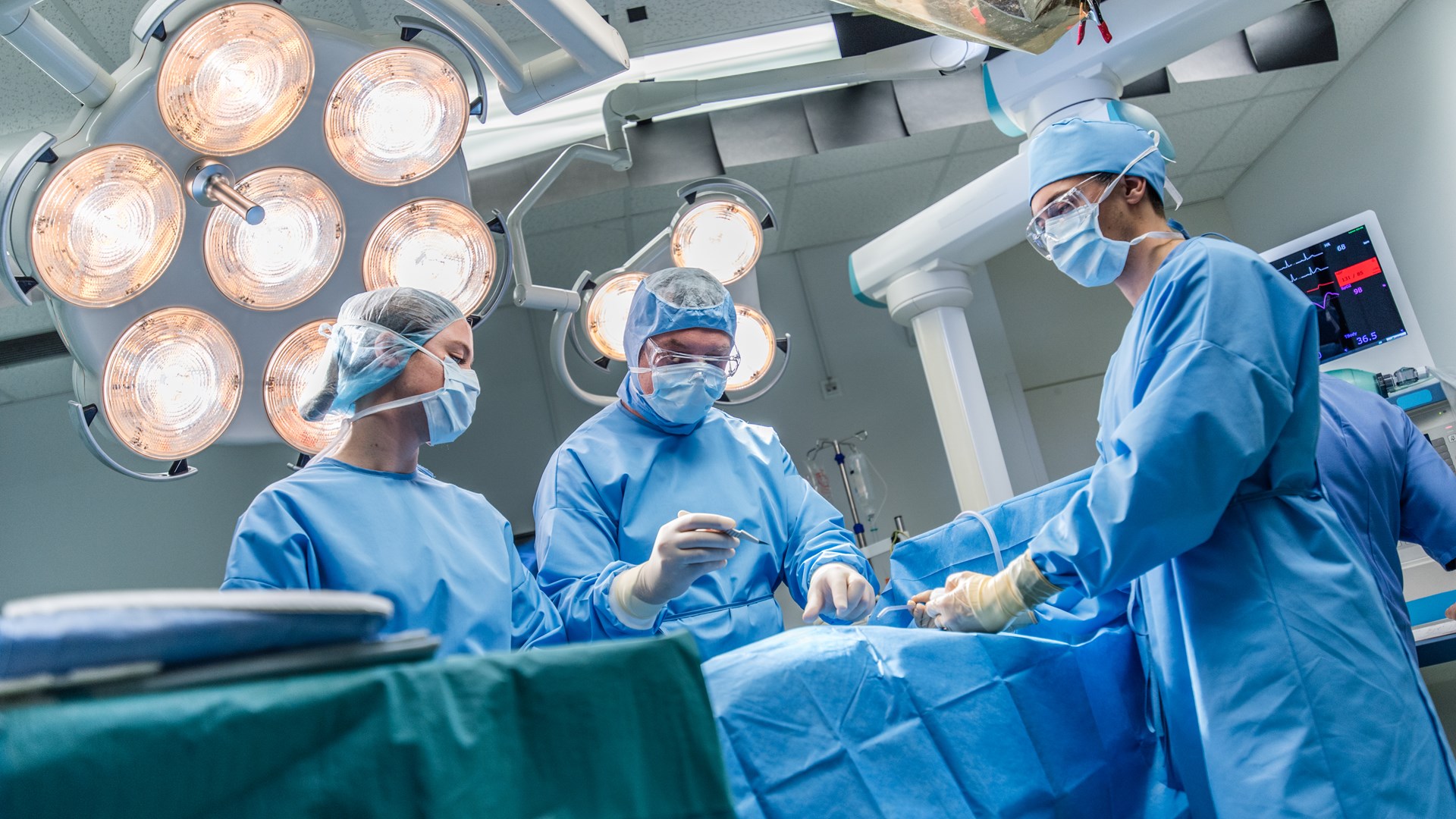
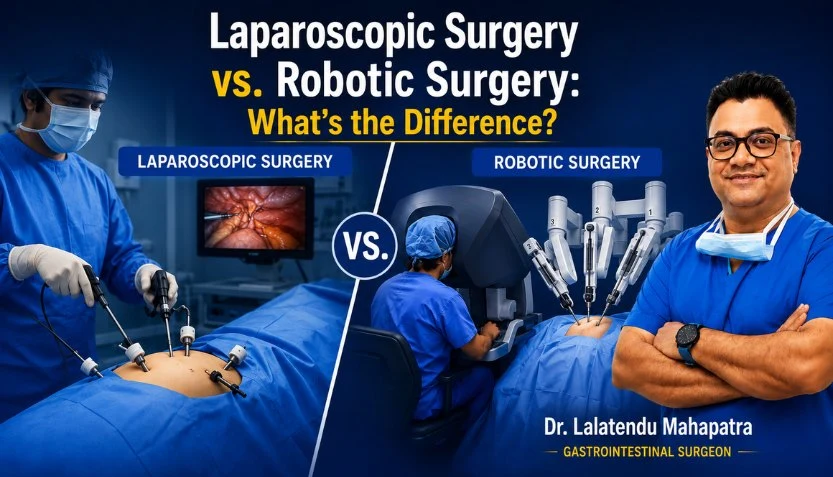
When your doctor recommends minimally invasive surgery, you may hear two terms used almost interchangeably – laparoscopic surgery and robotic surgery. Both are far less traumatic than traditional open surgery. Both involve small incisions. Both promise faster recovery. But they are not the same, and understanding the difference can help you make a more informed decision about your care.
As a surgical gastroenterologist with extensive experience performing both laparoscopic and robotic procedures – from complex hepatobiliary surgeries to hernia repairs and colorectal conditions – I want to walk you through these two approaches clearly and honestly, so you know exactly what to expect.
First, What Is Minimally Invasive Surgery?
Before comparing the two techniques, it helps to understand what they share. Both laparoscopic and robotic surgeries are minimally invasive, meaning the surgeon operates through small incisions – typically 0.5 to 1.5 cm – rather than making a large open cut.
A small camera (laparoscope) is inserted through one of these incisions to give the surgeon a magnified view of internal organs on a screen. Specialized instruments are inserted through the remaining incisions to perform the operation. This approach significantly reduces blood loss, post-operative pain, hospital stay, and recovery time compared to open surgery.
What Is Laparoscopic Surgery?
Laparoscopic surgery – often called keyhole surgery – is the gold-standard technique in minimally invasive surgery today. The surgeon holds long, slender instruments and manipulates them directly while watching a video feed from the laparoscope on a high-definition monitor.
In my practice, laparoscopic surgery is used routinely and with great precision for procedures such as:
- Laparoscopic Cholecystectomy –gallbladder stone removal
- Laparoscopic Hernia Repair – inguinal, ventral, and hiatal
- Laparoscopic Appendectomy – removal of the inflamed appendix
- Colorectal surgeries for both benign and malignant conditions
- Upper GI procedures involving the stomach and esophagus
- Hepatobiliary and pancreatic surgeries
Laparoscopic surgery is extremely effective, widely accessible, and has a well-established safety record built over decades. For most routine and even complex gastrointestinal conditions, it remains the preferred and most proven choice.
What Is Robotic Surgery?
Robotic surgery – most commonly performed using the da Vinci Surgical System – is an advanced extension of laparoscopic surgery. However, instead of directly handling instruments, the surgeon sits at a console and uses hand and foot controls to operate robotic arms that hold the surgical instruments inside the patient’s body.
Key features that distinguish robotic surgery include:
- Enhanced 3D high-definition vision with up to 10x magnification
- Wristed instruments that can rotate 360 degrees – far beyond the human wrist
- Built-in tremor filtration technology that eliminates natural hand tremors
- Greater precision in tight, anatomically complex spaces
It is important to understand: robotic surgery does not mean the robot operates independently. At all times, the surgeon is fully in control. The robotic system simply translates the surgeon’s movements into precise, scaled actions inside the patient’s body. The technology serves the surgeon’s expertise – not the other way around.
Laparoscopic vs. Robotic Surgery: A Side-by-Side Comparison
|
|---|
Which Approach Is Right for You?
This is the most common question I receive from patients – and the honest answer is: it depends on your specific condition, your anatomy, and the complexity of the surgery required.
Laparoscopic surgery is the ideal choice when the procedure is well-defined, the anatomy is straightforward, and surgical access is adequate. It is the standard approach for cholecystectomy, appendectomy, and most hernia repairs – proven, precise, and highly effective.
Robotic surgery adds significant value when the operation involves a confined anatomical space – such as deep in the pelvis, around the pancreas, or near delicate vascular structures. The enhanced dexterity and magnification allow for more refined dissection with a lower risk of injury to surrounding structures.
The decision between laparoscopic and robotic surgery is never about which technology is superior in isolation. It is about matching the right technique to the right patient, the right condition, and the right surgical goal. If you are wondering what to expect before and after laparoscopic surgery, that is a helpful starting point – but ultimately, it is a decision made after a thorough clinical evaluation.
Are Both Approaches Safe?
Yes – when performed by an experienced surgeon, both laparoscopic and robotic surgeries carry excellent safety profiles. The most important factor in any surgical outcome is not the instrument in the surgeon’s hands, but the surgeon’s training, experience, and judgment.
With over 6,000 surgeries performed and deep expertise in both techniques, my approach is always guided by one unwavering principle: what gives this patient the safest, most effective result with the fastest return to normal life? You can also read about how long GI surgery recovery typically takes to set realistic expectations.
|
|---|
Conditions Treated Through These Approaches at Our Practice
At my practice, both laparoscopic and robotic surgery are offered for a comprehensive range of gastrointestinal and hepatobiliary conditions, including:
- Gallbladder disease –Laparoscopic Cholecystectomy for gallbladder stones
- Hernia –Laparoscopic Hernia Repair (inguinal, ventral, hiatal)
- Appendicitis –identify early symptoms of appendicitis and Laparoscopic Appendectomy
- Colorectal conditions – benign and malignant, including gastrointestinal cancers
- Upper gastrointestinal diseases of the stomach and esophagus
- Hepatobiliary and pancreatic conditions – including complex bile duct problems
- Piles and fistula – stapled and laser surgical options
Every patient receives a thorough clinical evaluation before any recommendation is made. If you are experiencing any common gastrointestinal problems, it is always best to consult a specialist early. The goal is always an affordable, safe, and effective treatment plan – customised entirely to your individual needs.
A Note From Dr. Lalatendu Mahapatra
I understand that surgical decisions can feel overwhelming. You want clarity, not confusion. You want a doctor who explains your options honestly, recommends what is truly best for you, and stands by you through every step of the journey – from diagnosis to full recovery.
Whether your condition calls for laparoscopic precision or robotic dexterity, my commitment to you remains unchanged: expert, compassionate, and affordable surgical care – every single time.
If you have questions about which surgical approach is right for your condition, I warmly invite you to schedule a consultation. Let us talk through your options together and find the best path forward for your health.
Discover More Topics You May Find Helpful:
👉 What to Eat After Bariatric Surgery: A Complete Diet Guide
👉 Understanding Gallbladder Stones: Causes, Symptoms, and Treatment
👉 How Long Does GI Surgery Recovery Take?
👉 Why More Patients in Bhubaneswar Prefer Laparoscopic Surgery

Related Posts

Why Patients Prefer Minimally Invasive GI Surgery ...
When GI surgery is recommended, patients often worry about pain, hospital stay, scars, and recovery time. GI surgery in ...
Read More
What is the Difference Between Robotic and Laparos...
By Dr. Lalatendu Mahapatra | Gastrointestinal, Laparoscopic & Robotic Surgeon, Manipal Hospitals, Bhubaneswar “...
Read More